
How "Othering" Creates Chronic Stress for Students
Jul 13, 2026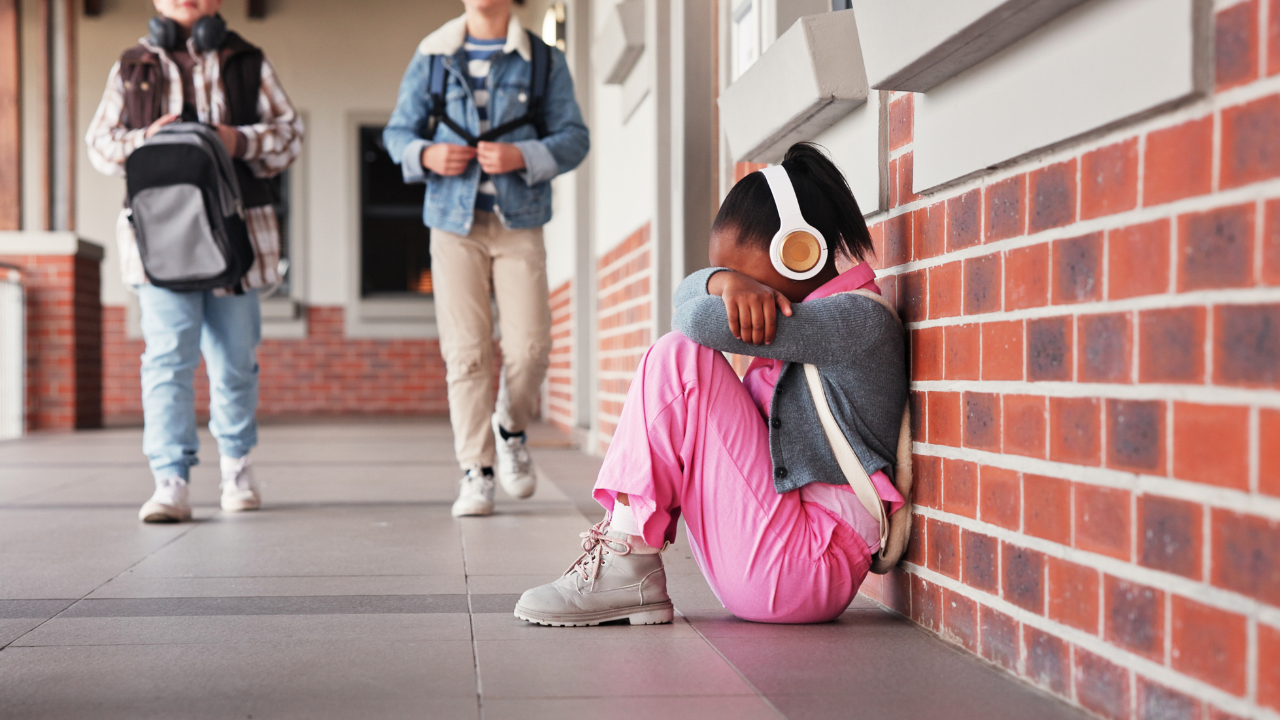
When we talk about trauma-informed education, we often focus on Adverse Childhood Experiences (ACEs) and the impact of significant traumatic events on a student's development. Research has consistently shown that children who experience trauma are at greater risk for challenges in school, difficulties with self-regulation, and poorer long-term outcomes. But not all stress comes from a single traumatic event.
Many students experience something far more common, and often more difficult to recognize: the chronic stress of being "othered."
What Does It Mean to Be Othered?
Othering occurs when individuals or groups are viewed as different from, and often inferior to, an assumed norm. Racism, misogyny, homophobia, transphobia, classism, and ableism are all forms of othering, because they position one group as the default and another as outside of that default.
Whether the dominant group is white, male, heterosexual, cisgender, middle class, or neurotypical, students who do not fit that assumed norm often receive explicit and/or implicit messages that they are different, less valued, or somehow don't belong. These messages can come from peers, adults, policies, curriculum materials, media, or broader societal systems. Sometimes they are overt, but more often, they are subtle and persistent – even when they are unintentional.
The Hidden Impact of Chronic Stress
We know that chronic stress affects the brain and nervous system. Research has linked experiences such as racism, poverty, homophobia, and ableism to increased stress, poorer physical and mental health outcomes, and reduced overall well-being. While these experiences may not always fit traditional definitions of trauma, they can create a state of ongoing stress that places a significant burden on students.
Imagine, as a kid, constantly having to:
- Adapt to environments that were not designed with you in mind.
- Explain or defend aspects of your identity.
- Navigate stereotypes or assumptions.
- Monitor whether you will be accepted, excluded, or criticized.
- See few examples of people like yourself reflected positively in your learning environment.
That mental and emotional effort requires energy that, in time, impacts attention, learning, emotional regulation, and a student's sense of safety and belonging.
What Can Educators Do?
The good news is that educators have the power to create environments where all students feel valued and supported, helping to reduce the chronic stress of being othered in school.
Examine your classroom default
When we design lessons, establish expectations, and select materials, consider: Who is this designed for?
- Whose stories are represented in the curriculum?
- Whose voices are included in classroom discussions and texts?
- Do classroom expectations reflect only one cultural perspective?
- Are multiple ways of learning, communicating, and participating valued?
Creating inclusive classrooms begins with recognizing the assumptions that may be built into our systems and practices.
Investigate Your Own Biases
Every human being has biases. Our brains naturally categorize information as a way to make sense of the world. Biases are not evidence of being a bad person; they are evidence of having a human brain. What matters is our willingness to examine them.
Educators have a responsibility to identify beliefs or assumptions that could unintentionally influence interactions with students. Reflective practices, professional learning, and tools such as implicit association tests can help increase self-awareness and reduce the likelihood that unconscious biases impact decision-making.
Growth begins with curiosity and self-reflection.
Address Othering When It Happens
Students pay close attention to what adults respond to…and what adults ignore.
When comments or behaviors exclude, stereotype, or diminish others, silence can unintentionally communicate acceptance. While educators cannot control every student interaction, they can establish clear expectations for inclusion, belonging, and respect. Addressing harmful behavior promptly and consistently helps create a safer environment for everyone.
Students deserve to know that their learning environment will protect them from harm.
Create and Sustain Regulating Spaces
At InMind, we often say that regulation is the foundation for learning. Students who experience chronic stress also need environments that help their nervous systems feel safe, supported, and connected. This includes predictable routines, strong relationships, opportunities for co-regulation, sensory supports, and classrooms that prioritize belonging. These practices benefit all students, but they are especially important for students whose daily experiences may already include significant stressors outside of school.
A Trauma-Informed Lens Includes Belonging
Trauma-informed practice is not only about responding to major adverse experiences. It is also about understanding the conditions that shape students' daily lives and influence their sense of safety. When students repeatedly encounter messages that they are different, unwelcome, or less valued, the resulting stress can have meaningful impacts on learning and development.
As educators, we are not able to eliminate every source of stress our students face. We can, however, create classrooms that respond effectively to the stressors we know exist for our students. We can create spaces where students feel seen, respected, and valued for who they are.
And for many students, that sense of belonging can be a powerful protective factor.
References
https://www.cdc.gov/mmwr/volumes/73/su/su7304a4.htm
https://pmc.ncbi.nlm.nih.gov/articles/PMC2528798/
https://pmc.ncbi.nlm.nih.gov/articles/PMC6322390/
https://www.tandfonline.com/doi/abs/10.1080/09638288.2025.2578425